 WHERE TO BUY GEALAN WINDOWS
 INFO@GEALANWINDOWS.COM
 (740) 814-6787

Why Do European Windows Open Inwards? The History Behind the Design.
Anyone who grew up in the United States knows casement windows that crank outward and double-hung windows that slide up and down. Then comes the first encounter with a European tilt and turn window, where the whole sash swings inward like a door or tilts in from the top, and the motion feels backwards. The obvious question follows: why do European windows open inwards at all?
Ask Europeans and the answers come quickly. Easier to clean. Better ventilation. More secure. Every one of those holds up, and none of them explains the origin. They describe what European windows deliver now, not why the tradition began centuries ago.
The actual story predates tilt and turn windows, predates uPVC, and predates affordable glass. Once it clicks, the inward swing stops reading as a quirk and starts reading as the logical end of a very long chain of practical decisions.
The Short Answer: The Outside of the Window Was Already Taken
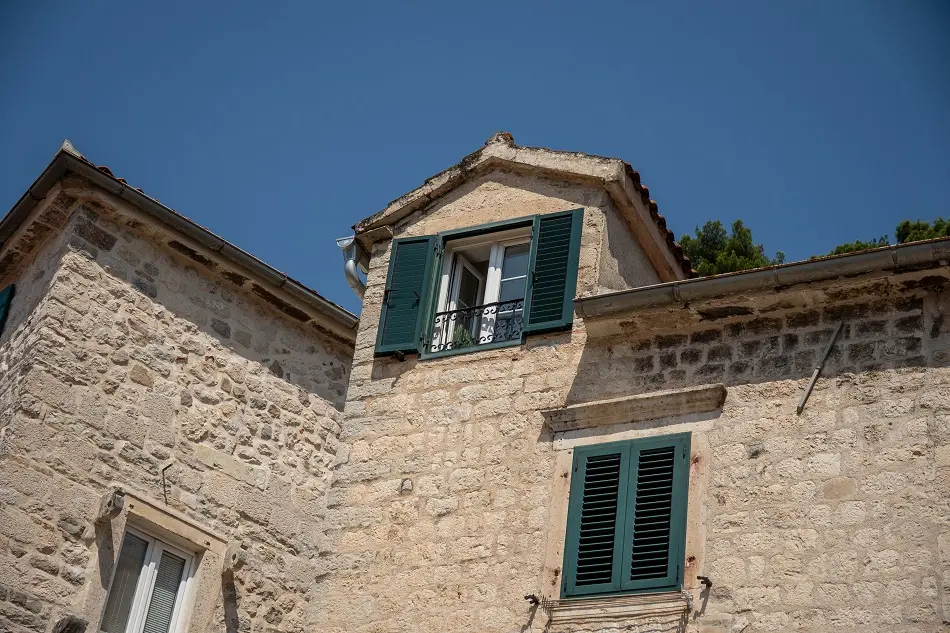
Through most of European building history, the outside of a window opening belonged to something other than the glass.
Shutters came first. Iron security grilles followed. External roller shutters came after that. All of them sat on the exterior face of the opening, which left the glazed sash exactly one direction to swing: inward. A sash and an external shutter cannot both open outward. They would hit each other.
That one constraint seeded the entire tradition. Easy cleaning, wind resistance, tighter sealing, and eventually the tilt-and-turn mechanism all grew on top of it.
Before Glass Was Cheap, the Shutter Was the Window

Glass was a luxury for centuries. Through the medieval and early-modern periods, plenty of windows carried no glazing whatsoever, and the shutter handled the job the glass would later take over.
Shutters blocked wind, rain, insects, and birds. They supplied privacy and stopped draughts. They also supplied security, which mattered enormously: historic shutters were routinely barred shut with iron rods run through hasps, and external shutters appeared especially often on the ground-floor windows of vulnerable buildings during a period when glass cost a fortune and broke easily.
Across much of continental Europe, builders mounted those shutters on the outside of the building, and there they remain. External shutters still define European facades.
Picture a shutter hinged on the exterior of the opening, swinging outward against the wall. The glazed sash behind it has no room to do the same. The two would clash. One arrangement works: a shutter that opens out, a glazed sash that opens in. Continental Europe settled into exactly that pattern of outer shutters and inner-opening casements.
British vs. European Windows
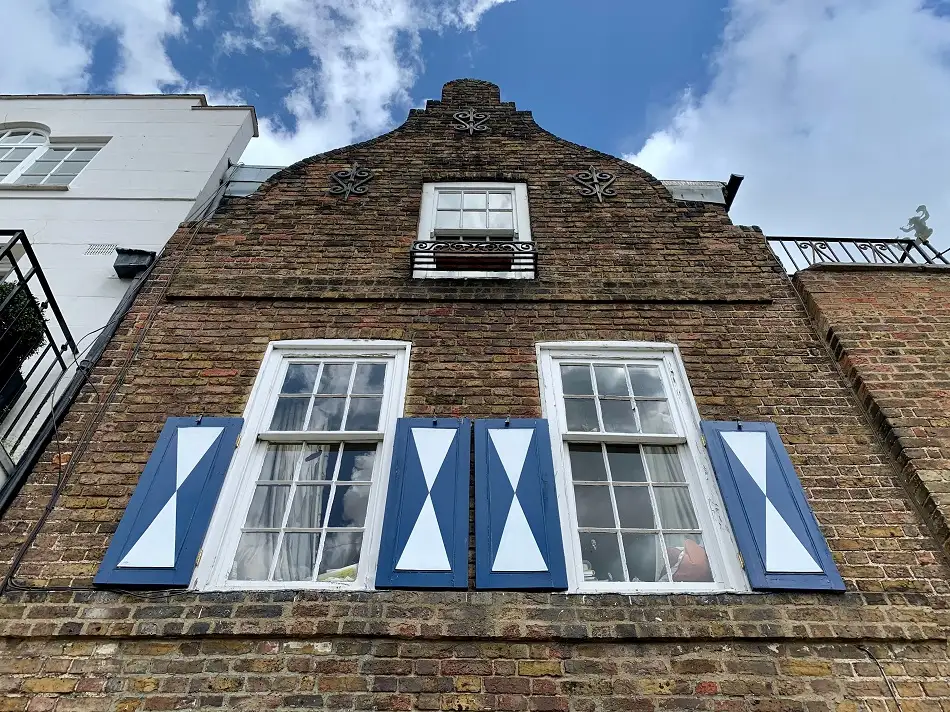
Continental Europe and the English-speaking world split here, and the split traces back to where the shutter lived. The Continent mounted operable shutters outside, the glazed sash opened inward, and the convention held.
Britain went elsewhere. It favored casements that opened outward and, more than anything, the vertically sliding sash window that never swings at all. British homes that used shutters often used internal folding ones tucked into the window reveal, or hung external shutters purely for looks. Neither arrangement demanded an inward-opening sash.
The British path is the one that crossed the Atlantic. Settlement of the American colonies came predominantly from Britain, and the British tradition came along intact. The double-hung sash window became the dominant American form through the Georgian era, and casements, where they turned up, generally opened outward. That explains why the inward swing strikes U.S. homeowners as foreign.
No inward-opening tradition arrived and then died out here. The dominant colonial influence never opened its windows inward in the first place. (Spanish and French settlers did carry continental, inward-leaning habits into their own footholds in Louisiana, the Southwest, and Québec, though none of those ever became the national norm.)
Security Bars and the Ground Floor
Shutters were not the only occupant of the exterior. On lower floors, where break-ins posed a genuine risk, many European buildings mounted fixed iron grilles or security bars across the window on the outside of the opening.

A fixed grille imposes the same constraint a shutter does, except permanently. No sash can swing outward past it. So the glazed window opened inward, into the room, once again. Dense European towns added a second benefit on ground-floor and street-facing windows: an open sash never jutted out over a narrow sidewalk or into someone walking past.
The Box Window: A 19th-Century Precursor to Double Glazing

Well before the sealed insulated glass units standard in windows today, builders in Germany, Austria, and Central and Eastern Europe developed the Kastenfenster, or box window. The design set an outer sash and an inner sash inside a single deep frame with an air space between them. Both sashes opened inward, and the trapped air functioned as insulation, cutting heat loss and softening noise. Certain designs even housed a sun or heat blind within that cavity.
The box window produced an insulating air corridor between two panes of glass, the same principle behind modern double- and triple-pane glazing, reached with two separate operable sashes rather than one sealed unit. Cleaning that cavity or adjusting the blind meant reaching into it, which made inward-opening sashes a structural requirement of the design rather than a convenience.
The box window stands as a direct ancestor of the thermally efficient European window. It also cemented the inward-opening habit for another few generations of builders.
From Shutters to Roller Shutters: The Tradition Persisted

Cheap glass and optional shutters should have loosened the inward-opening logic. They did not, because the shutter never actually disappeared. It changed form.
Across Germany and much of Central Europe, the external shutter’s modern descendant is the Rollladen: the exterior roller shutter that tucks into a housing above the window and rolls down over the glass for shade, insulation, security, and blackout. Like the timber shutter before it, the Rollladen lives on the outside of the opening — which means the window behind it still has to open inward. A centuries-old constraint simply carried forward in a modern form.
The Modern Answer: Tilt-and-Turn Windows

German engineers took that long-standing inward-opening tradition in the 1950s and converted it into a deliberate advantage with the first tilt and turn window. What shutters had imposed as a limitation became the feature that made an entirely new class of window possible.
Inward opening is what enables tilt and turn windows to work the way they do:
- Multi-point security. The sash closes into the frame from the inside, which allows the locking pins to sit between sash and frame, protected and out of sight, drawing the window tight at several points around its perimeter and making it far harder to force from outside.
- Secure ventilation. Tilting the top of the sash inward creates a controlled gap for fresh air while the sash stays anchored, so ventilation never means leaving the opening wide and exposed.
- Cleaning from inside. Swinging the sash fully inward puts both faces of the glass within reach from indoors, a genuine necessity in the multi-story apartment buildings that define European cities.
- Wind resistance. An inward-opening sash pulled tight by multi-point hardware isn’t caught and slammed by gusts the way an outward casement can be.
One clarification is worth making: a tilt and turn window is not a casement window. A casement swings outward on a crank. A tilt and turn window runs on a single-handle mechanism, opens inward, and uses no crank whatsoever. Inward opening now sits so deeply inside European performance and safety expectations that it functions as the standard, and GEALAN engineers its S 8000 and GEALAN-LINEAR systems around it.
So, Why Do European Windows Open Inwards? The Full Picture.
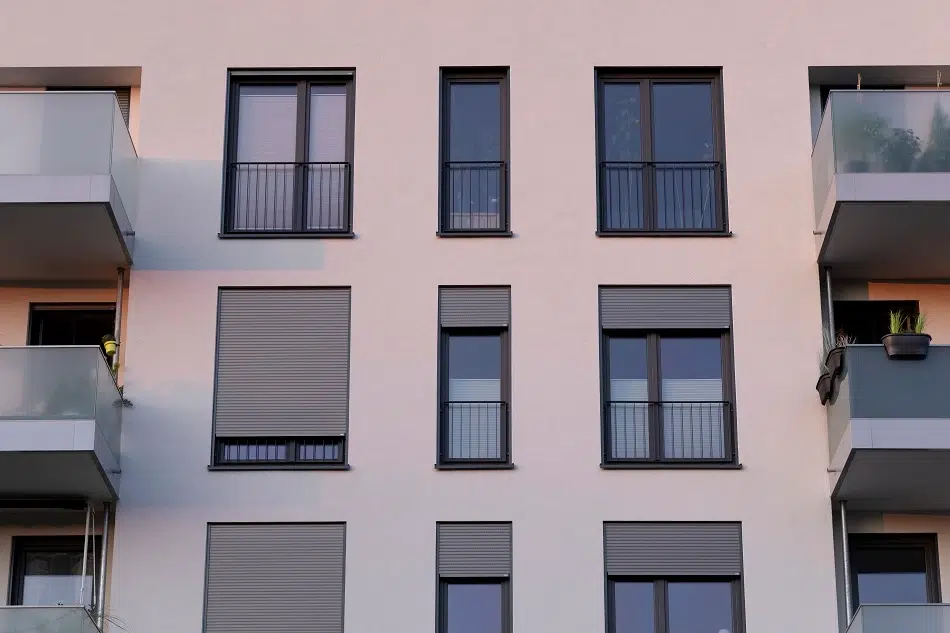
Put it all together and the answer is a chain, not a single fact:
- Glass once cost a fortune, so the shutter, mounted outside, handled the real work of weatherproofing and security.
- An external shutter left the glazed sash only one way to swing: inward.
- Security grilles on lower floors made that constraint permanent.
- The box window turned inward-opening sashes into a requirement of early double glazing, tying the habit to thermal performance.
- External roller shutters brought the constraint into the modern era.
- Tilt and turn windows converted inward opening from a necessity into an engineered advantage.
One simple root cause sits beneath all of it. In Europe, the outside of the window was already spoken for.
Table of Contents
Bring European Window Engineering to Your Project
That inward-opening tradition is the reason European windows are known today for tight seals, serious security, and easy operation. GEALAN carries the lineage forward, engineering the uPVC profile systems behind modern tilt and turn windows, picture windows, and sliding doors, all built to European standards that trace back to a shutter hung centuries ago.
If you’re an architect, builder, or manufacturer working with European-style windows, our team can help you specify the right GEALAN profile systems and connect you with a licensed U.S. fabricator.
Contact us to walk through your project.
FAQs
Why do European windows open inwards?
The exterior of the window opening was occupied for centuries, first by external shutters and later by security grilles and roller shutters. A glazed sash cannot swing outward past an external shutter, so it opened inward instead. Modern tilt and turn windows preserved that inward swing and built security, ventilation, and cleaning advantages around it.
Are European windows the same as tilt and turn windows?
Tilt and turn windows are the most common modern European window, but the inward-opening tradition predates them by centuries. Older European casement and box windows also opened inward for the same underlying reason.
Is a tilt-and-turn window a casement window?
No. A casement window swings outward on a crank. A tilt and turn window opens inward on a single-handle mechanism with no crank, and it can also tilt inward from the top for ventilation.
Why don't American windows open inwards?
American building practice descends primarily from the British tradition, which favored the vertically sliding double-hung sash window and outward-opening casements over any inward-opening sash. Britain often used internal folding shutters or purely decorative external ones, so its windows never needed to swing in. Continental Europe held onto its external operable shutters, and later its security grilles and roller shutters, so it held onto inward-opening sashes.
Do inward-opening windows take up interior space?
A fully swung-open sash does project into the room, which is worth planning around. In everyday use, most European tilt and turn windows stay in tilt mode for ventilation, with the top tilting in only slightly, and swing fully inward mainly for cleaning or maximum airflow.
Table of Contents

Windows Built On Centuries of Engineering
External shutters gave way to modern tilt and turn systems, and inward-opening European windows remain a tradition GEALAN carries forward with precision-engineered uPVC profiles.


